

User Experience Evaluations That Turn Frustration Into Results
A UX audit isn’t about pointing fingers. It’s about finding the friction that costs you conversions and loyalty. Fixing those issues leads to more sign-ups, happier users, and measurable business gains.
I’ll give you a clear, prioritized plan so your team knows exactly what to improve and why it matters.
The benefits of UX audits
The User Experience Evaluations I deliver help you…
Increase Conversion Rates
I pinpoint where users drop off and show you how to fix those friction points. The result? More visitors turning into customers without bigger ad budgets.

Boost Customer Retention
By improving the experience people have once they’re through the door, you reduce churn and increase lifetime value. Happy users buy more and stay longer.

See With Fresh Eyes
You and your team are too close to the problem. I bring decades of cross-sector experience to spot issues you’ve stopped noticing and highlight new opportunities.
Act On Clear Priorities
No vague advice or jargon. I give you straightforward fixes, ordered by impact, so your team knows exactly where to start and what will deliver the big wins.
What is a UX audit?
A UX audit is a health check for your website or app. I review how people use it, find the spots where they get stuck or frustrated, and show you how to fix them. The goal is simple: make it easier for users to do what they came for, and help your business grow in the process.
How Much Does a UX Audit Cost?
The cost of an UX audit depends on your budget and what you need. The more you invest, the deeper I can go, and the stronger the results will be. I’ll always work within your budget, but here are three common options to give you a sense of what’s possible.
First Impressions
Sometimes you just want a quick outside view. I’ll spend 20–30 minutes exploring your site and record my thoughts as I go.
- Great for spotting obvious friction fast
- Gives you talking points to spark change
- Only £125
Expert Perspective
This is me rolling up my sleeves and giving your site a thorough check-over using my experience. No user testing, just clear recommendations based on what I see.
- Draws on 30+ years of UX expertise
- Actionable, prioritized fixes
- Starting at £2,000+
Research-Driven
When you need the full picture, this goes deeper. I’ll combine usability testing, surveys, analytics, competitor reviews, and sentiment analysis for a complete view of what’s working and what isn’t.
- Evidence you can take to leadership
- Insights backed by real user data
- Starting at £5,000+
Research-Driven Review
When you need the full picture, a quick look isn’t enough. A Research-Driven Review digs deeper to give you hard evidence and actionable insights you can take straight to leadership.
Every method adds another layer of clarity, building a complete story of what’s really happening on your site and why.
- Competitive Analysis
See how your site stacks up against others in your space and spot opportunities they’ve missed. - Sentiment Analysis
Uncover your users’ real objections, concerns, and questions so you know what to address. - Usability Testing
Moderated and unmoderated sessions to watch real people use your site and reveal blockers. - Exit Intent Surveying
Ask visitors why they’re leaving at the point they abandon, and turn those insights into fixes.
- Analytics Review
Dig into the data to find where users struggle, drop off, or loop back in frustration. - Customer Journey Mapping
Connect the dots between research insights to see the bigger picture of how people move through your site. - Accessibility Check
Identify barriers that frustrate users with different needs and ensure no one is excluded. - Heuristic Evaluation
A structured expert walkthrough using proven usability principles to catch common pitfalls fast.

Actionable Insights
Paul has the ability to see what is hiding in plain sight. He validated ideas under consideration and provided new, actionable recommendations. The most valuable insight was illustrating how our issues were symptoms of an inefficient UX project team structure.

Unique Talent
Paul used his unique talent to help us pull together a business case to implement a UX team here at the University of Oxford. During the process, Paul provided insight into the wider UX community and offered his personal recommendations on how best to present the opportunity to our Pro-Vice-Chancellor. This helped us develop a compelling business case and quickly secure funding for a UX team.

Superior Abilities
Paul has superior abilities in communications and of understanding the user experience, in addition to excellent technical web design skills. He has a deep understanding of the way in which organisations are structured and therefore is able to provide the best possible solutions. He is, above all, a people person.

Fantastic
Paul has been a fantastic mentor. He’s full of energy and ideas and has been an invaluable support in navigating all aspects of leading a fast-moving digital team.
Actionable Insights
Paul has the ability to see what is hiding in plain sight. He validated ideas under consideration and provided new, actionable recommendations. The most valuable insight was illustrating how our issues were symptoms of an inefficient UX project team structure.

An inspiration
Paul is an inspiration, I only wish I’d worked with him earlier in my career. His ability to understand and break down problems and offer advice, drawing on his many years of experience is unrivalled. He genuinely wants to get the best out of you and your organisation and you can’t ask for more than that.

Invaluable
Medecins San Frontieres, being a decentralised international association, faces challenges in meeting the needs of a diverse global audience. Paul and the team at Headscape have been invaluable in helping us see the potential of digital for doing this. They have helped us recognize the changes needed to engage with our connected audiences, bringing clarity and innovation to our digital strategy.

Supportive and Challenging
It’s been a pleasure working with Paul. He manages to be both supportive and challenging at the same time and has a very accessible approach. It’s been a really inspiring process and I would love the opportunity to work with him again.

Entertainingly Informative
We can count on Paul to be entertainingly informative. When we bring him to speak at our workshops, people walk out of the session energized and with a better understanding of how a multichannel journey should be assessed and optimized. Thanks Paul!
Delve deeper
Do you want a more detailed picture of why I favor user experience evaluations and how I approach them? If so, feel free to contact me and we can chat. Alternatively, here are some more thoughts on the subject.
Why Undertake a User Experience Evaluation
Most organizations don’t commission a UX audit because everything is perfect. They do it because they’ve got a nagging feeling something isn’t quite right. Maybe conversion rates are slipping, or customer support calls keep going up, or someone on the leadership team has started asking uncomfortable questions about why competitors seem easier to use.
A UX audit is like taking your digital product in for a check-up. It’s not about redesigning everything from scratch or pointing out every tiny detail that could be tweaked. It’s about identifying the real friction points that are holding users back and by extension, holding your business back too.
The benefits of an audit stretch across almost every department:
- Marketing sees better returns on campaigns because fewer people drop out at the landing page.
- Product teams get a clearer picture of what features confuse or delight customers.
- Support spends less time answering repetitive “how do I do X?” questions.
- Leadership gains confidence that investment decisions are guided by evidence, not just gut feel.
And of course, your users themselves notice the difference. They stop feeling frustrated, they start completing more tasks, and they stick around longer. That combination of happier customers and better business outcomes is what makes an audit so valuable.
Where a User Experience Evaluation helps
It’s tempting to think of user experience evaluations as something just for marketing websites. But the truth is, they’re useful anywhere people are trying to get things done digitally.
- Websites: For most organisations, the website is still the front door. It’s where customers arrive, form their first impressions, and either move forward or leave. A UX audit can show why visitors aren’t filling in that form, why the checkout feels clunky, or why content isn’t getting read.
- SaaS Applications: Software-as-a-Service lives or dies by usability. If people can’t get value quickly, they cancel. A UX audit helps reveal where onboarding breaks down, which workflows are too complicated, and why retention numbers may be flatlining.
- Enterprise Systems: Internal tools are often overlooked. Staff are told to “just get on with it,” even when systems are slow and confusing. An audit can uncover ways to save hours of wasted time and improve morale; changes that ripple through the whole organisation.
- E-commerce: Shopping carts are a graveyard of lost revenue. A UX audit can explain why items aren’t making it through to checkout, why promotions aren’t converting, and why repeat purchases aren’t happening.
- Public Sector & Non-Profits: When budgets are tight and missions are critical, efficiency and clarity matter more than ever. A UX audit can make sure citizens or donors don’t get stuck before completing vital actions.
In short, anywhere there’s a digital interface and human beings trying to use it, a UX audit can help.
How to Conduct a User Experience Evaluation (DIY or Hire an Expert)
Some teams wonder whether they should just run their own UX audit. The answer is: you can, but there are trade-offs.
If you’re doing it yourself, you might:
- Review analytics to see where people drop off.
- Ask a few colleagues or friends to try out key tasks and note where they stumble.
- Use simple survey tools to gather feedback.
- Compare your site to competitors and see what feels easier there.
All of that is better than nothing. It can surface low-hanging fruit and give you a basic sense of what’s going wrong.
But there are limits. Internal teams often suffer from “can’t see the wood for the trees” syndrome. You’re too close to the product, too used to its quirks, and too invested in defending past decisions. It’s hard to be objective when you’re auditing your own work.
That’s where bringing in an external expert makes a difference. Someone like me has:
- Breadth of experience: I’ve worked across sectors; from charities to big corporates to universities. That means I spot patterns quickly and know which problems are common versus unique.
- Proven methods: I use a blend of analytics, user testing, surveys, sentiment analysis, and heuristic evaluation. You won’t just get my opinion; you’ll get a rounded view based on evidence.
- Fresh perspective: I’m not weighed down by internal politics or “how we’ve always done it.” That lets me ask the awkward questions and call out issues that teams have learned to ignore.
It’s a bit like diagnosing your own health. You can check your temperature and Google symptoms, but when things get serious, you want a doctor to give you a proper examination.
My UX Audit Process
Every consultant has their own flavor of audit. Mine is designed to give you clarity without drowning you in jargon or 200-page reports. Here’s what it usually involves:
Discovery
I start by asking about your goals and constraints. What are you trying to achieve? What’s keeping you awake at night? And yes, what’s your budget? That shapes the depth of the audit and ensures I’m looking in the right places.
Analytics Review
I dig into your site or app data to spot where people fall out of the funnel, which pages have unusually high bounce rates, and what behaviors hint at confusion.
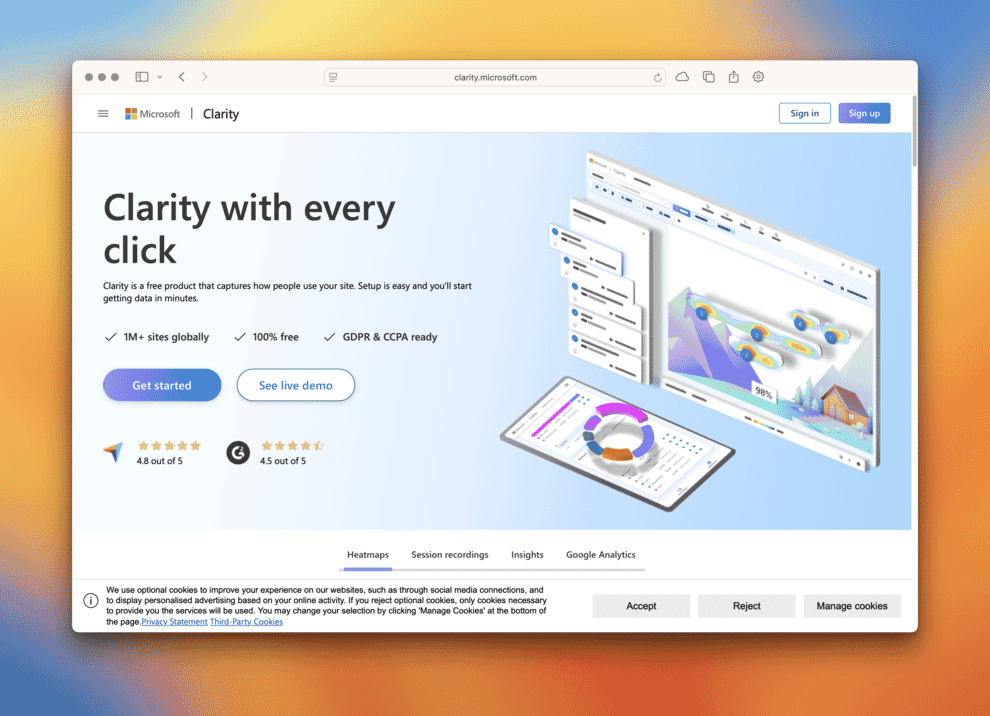
UX Competitive Audit
I look at direct competitors or organizations with similar offerings to see how your experience compares. This isn’t about copying, but about identifying both threats and opportunities.
Sentiment Analysis
I research what people are saying online; in reviews, social media, or forums. This uncovers objections, frustrations, and expectations that might never show up in analytics.
Usability Testing
I run a mix of moderated and unmoderated sessions where real users try to complete key tasks. Watching people struggle or succeed provides insights no survey can deliver.
Surveying
For websites, I often add a simple survey that pops up when someone is about to leave. A single question like “What stopped you today?” can provide incredibly useful feedback.

Accessibility Check
I run through your site with an accessibility lens to catch barriers for users with disabilities. It’s not just about compliance; it’s about being inclusive and widening your audience.
Heuristic Evaluation
Alongside research, I apply established usability principles to highlight common pitfalls. This structured expert review complements the raw user data.
Customer Journey Mapping
Finally, I stitch everything together into a clear journey view (from first impression to repeat engagement) so you can see how all the findings connect.

The Deliverable
At the end, you don’t just get a long list of problems. You get a prioritized action plan. Each recommendation is tied to potential impact, effort required, and supporting evidence. That way your team knows what to do first, what to plan for later, and what will move the needle fastest.
Wrapping It Up
A User Experience Evaluation isn’t just an academic exercise. It’s a practical tool for removing friction, improving customer experience, and driving business results.
Whether you start small with a First Impressions Review or go all in on a Research-Driven Review, the principle is the same: find the issues, fix them, and reap the benefits.
And unlike a redesign, an audit doesn’t require massive budgets or months of upheaval. It works with what you already have, showing you where small, smart changes can make a big impact.
If you’re curious about what a UX audit might uncover for your organisation, let’s talk. I’ll tailor the approach to your budget and goals and give you the clarity you need to move forward with confidence.
Interested in a UX audit? Let’s talk.
Book a no-obligation chat. We’ll talk through your budget, your goals, and what level of audit makes sense.
About me
I’m a UX consultant and conversion optimization specialist with 32 years in digital. I help teams create user experiences that work; winning support, improving results, and making change stick.
Contact me
Email: paul@boagworld.com
UK Based – Clients in North America, Europe, Asia, Australia.
how I help
- UX Strategy – Spot what’s blocking a great experience and get a clear plan to fix it.
- Improving Conversion – Simple, evidence-based changes that make every click count.
- Coaching & Leadership – A sounding board to help you lead with clarity and confidence.
- Training & Workshops – Hands-on sessions, playbooks, and self-learning so your team keeps improving.
Actionable Insights
Paul has the ability to see what is hiding in plain sight. He validated ideas under consideration and provided new, actionable recommendations. The most valuable insight was illustrating how our issues were symptoms of an inefficient UX project team structure.

Genuinely brilliant
Paul is genuinely brilliant to work with. He’s funny, thoughtful, and really good at meeting you where you are. He matches my energy, communicates clearly, and always seems to know how to say the right thing. Working with him feels easy, constructive, and properly enjoyable.

Demonstrates his prowess
As we talk, a pronounced pattern in Boag’s patter becomes apparent: he enthuses about a topic, demonstrates his prowess and then knocks himself down with a swipe of self-deprecation.

Smart & Generous
Paul is one of the smartest, most passionate, most generous people I know in the web / online industry. He is truly committed to helping organizations become simpler and more customer-centric.
An inspiration
Paul is an inspiration, I only wish I’d worked with him earlier in my career. His ability to understand and break down problems and offer advice, drawing on his many years of experience is unrivalled. He genuinely wants to get the best out of you and your organisation and you can’t ask for more than that.
Invaluable
Medecins San Frontieres, being a decentralised international association, faces challenges in meeting the needs of a diverse global audience. Paul and the team at Headscape have been invaluable in helping us see the potential of digital for doing this. They have helped us recognize the changes needed to engage with our connected audiences, bringing clarity and innovation to our digital strategy.
Supportive and Challenging
It’s been a pleasure working with Paul. He manages to be both supportive and challenging at the same time and has a very accessible approach. It’s been a really inspiring process and I would love the opportunity to work with him again.
Entertainingly Informative
We can count on Paul to be entertainingly informative. When we bring him to speak at our workshops, people walk out of the session energized and with a better understanding of how a multichannel journey should be assessed and optimized. Thanks Paul!

Best investment
You’re the best investment I’ve made thus far in my business, and that includes a previous coach, paid mentors and many courses! Your expertise is absolutely invaluable. Thank you!

Moves the Needle
It’s not a question of whether I’d work with Paul again, but what we’re doing next. He takes the time to deeply understand your business and goals, then moves the needle across the growth levers that matter most.