


This post is a part of a podcast course on truly lean UX. Listen to the whole episode above, or find out more about the course.
In this last lesson, and indeed the last episode of the Boagworld Podcast, we are joined by Jeremy Keith from Clearleft.
Also, Paul chat’s with Billy from Balsamiq about the great resource they have for breaking into UX.
The Boagworld Show was the first of its kind. No other web design podcasts existed in 2005 when we started, let alone a niche show about user experience.
Since its launch, we have discussed every conceivable aspect of the profession and spoken to those practising in every part of the field.
Much has changed in those 16 years, as roles become increasingly specialised and what we deliver is ever more complex.
Therefore, as we bring the Boagworld Podcast to a close, it feels appropriate to step back and ask what a UX designer is, how you start in the profession, and how you become truly great at it.
Let us begin by understanding exactly what a UX designer is and how that differs from UI design.
You Need to Understand the Difference Between UI and UX
Despite what I might like to think about my own self-importance, I am not the arbiter of right and wrong. However, I find it incredibly frustrating when people refer to UX and UI as interchangeable. They are very much separate roles to my mind, although you can find individuals capable of delivering both.
Many see the difference between the roles as being that a UX designer focuses on understanding the user, mapping their journey and wireframing the experience within an app or website. Meanwhile, a UI designer is a person who shapes the aesthetics and brand identity of the final interface.
Although that definition has some merit, it feels like it diminishes both UI and UX designers’ roles.
Most UI designers are perfectly capable of creating wireframes without a UX designer’s help. Equally, to describe a UX designer’s role as a wireframe creator barely scratches the surface of what they do. It is these kinds of descriptions that lead people to think UX and UI are interchangeable.
A UX designer should want to shape the entire user’s experience. They are just as interested in what brought somebody to the app or website. They also want to improve what happens after they leave it too.
A UX designer is interested in designing every digital touchpoint that influences the end-to-end user experience.
Where Are the Edges of UX Design?
Some would argue that a UX designer should be interested in the offline experience too, and I can understand this perspective. However, this is where we begin to stray into the territory of a customer experience designer.
Equally, others argue that a UX designer should engage with the backend and the systems that enable the user’s experience. Again this is a valid position, and I agree that UX designers should care about these things. However, once again, there are specialists in this field. Service designers are experts in these kinds of areas.
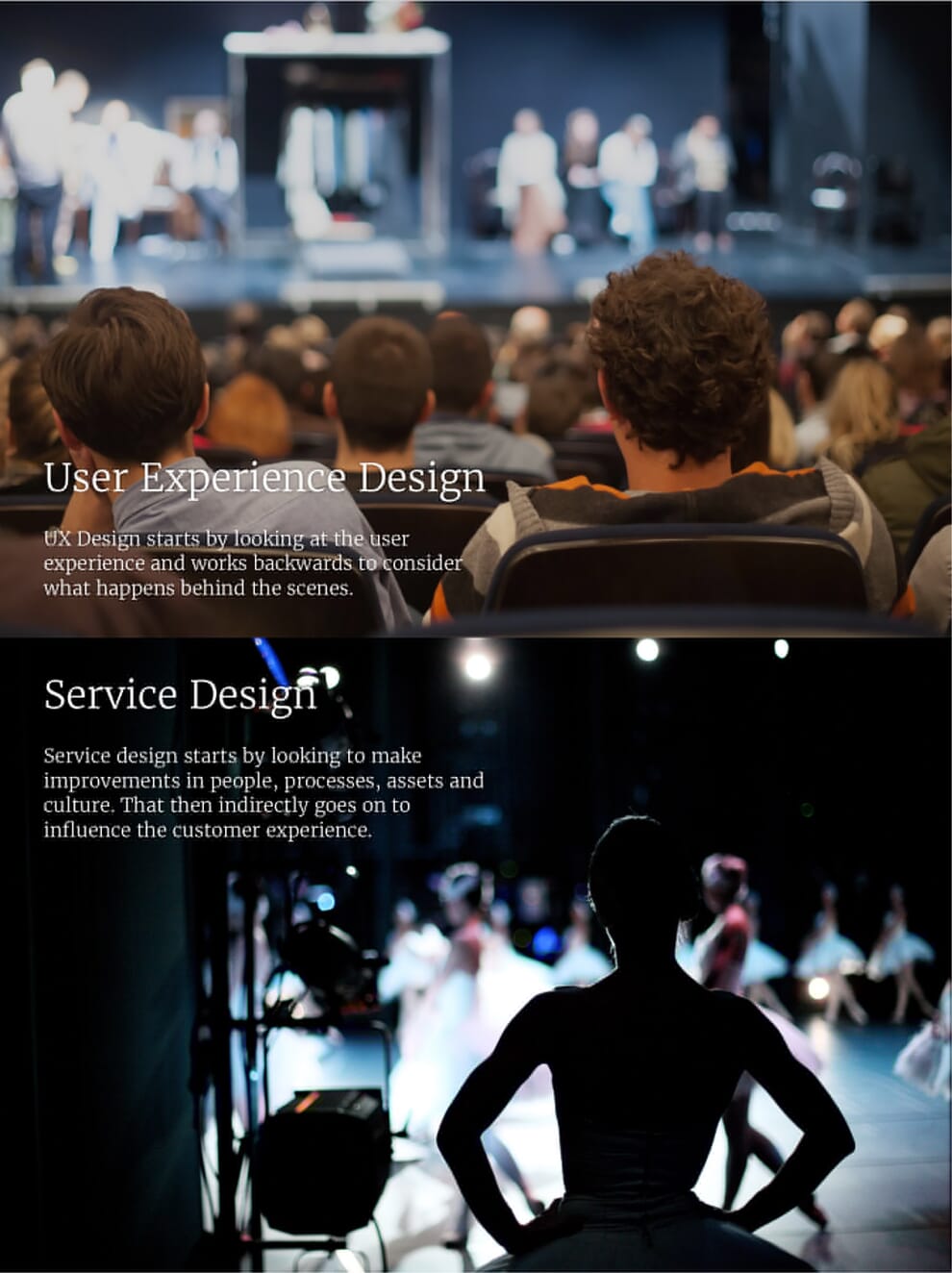
A UX designer has a big enough remit in shaping every digital touchpoint without looking too far beyond that. However, they should be aware of these other disciplines and what they involve.
That brings me on to how you train to become a UX designer.
Training in UX
I am probably not the best person to comment on UX education and getting into the field as a graduate. I learned on the job as the discipline evolved and so have zero formal training.
However, now that UX design has become a mainstream occupation, many courses have become available promising a UX career.
I haven’t even reviewed a fraction of the courses out there, so I cannot comment on their quality. However, if you are looking to receive some formal training in user experience design, I encourage you to seek out courses that do more than teach the obvious.
Try to find a course that teaches more than wireframing, prototyping and user research techniques. Look for a course that explores topics such as:
- service design,
- marketing,
- psychology
- and copywriting.
There is such an emphasis these days on specialising. Although this is a good idea in many fields, I would argue the opposite is almost true within user experience design. We need to have broad knowledge simply because so many things impact the user experience.
Of course, formal training is not the only route into user experience design. There are also ample opportunities to transition into the field from other disciplines.
Moving Into UX From Other Fields
The most obvious route into UX design is via UI design, and sure enough, that was the journey I went on.
From UI Design to UX
If you are a UI designer looking to transition across into UX, I would suggest you initially focus on two areas.
First, I would encourage you to start taking user research and testing much more seriously. That is an obvious first step into the field because it starts shifting away from an intuitive approach towards a more analytical approach.
The second step is maybe a bit less expected. I am increasingly concluding that if you want to transition from UI to UX, you must start embracing the content of what you are creating.
A good UI designer will already be thinking about content rather than happily dumping some Lorem Ipsum into a mockup. However, the more you transition into UX design, the more content will become an integral part of everything you work on.
As a result, you will need to have a good handle on communicating with people, which is why marketers and copywriters are equally well placed to transition into UX design as UI designers.
Other Routes into UX
There is a perception that UI design is the only route into UX design, but I disagree.
Because of the broad scope of the work done by UX designers, it allows people from many different backgrounds to move into the role.
An obvious role that could transition into UX design would be a user researcher, as these roles are often combined in many cases anyway.
However, I have seen marketers, project managers and copywriters all transition into the role. Heck, I would argue that even a developer could move across as their work profoundly impacts the users’ experience.
My point is that you do not need traditional ‘design’ skills to move into UX design. Yes, visual design does play an important part, and yes, you would need to understand layout, composition, colour theory and other design disciplines. However, you don’t need to have an artistic bent. All the skills to be a UX designer can be learned.
Not that you will become a great UX designer overnight. No amount of formal or informal training will make that happen.
Improving Your Skills as a UX Designer
A lot of what it takes to become a great UX designer comes down to experience. However, that isn’t just about doing the job for a long time. It is about seeking out the right experience and nurturing the right skills as you do so. I know ample people who have many years under their belt who are frankly terrible at their jobs because they have never pushed themselves.
So how can you push yourself to become a better UX designer? What skills should you be nurturing? Well, in my opinion, the best starting place is to become an observer of people.
Understand People
I am a fanatical people watcher. I find humans fascinating, and that fact has stood me in good stead in my role as a user experience designer. I love seeing the quirky things they do and the patterns of behaviour we all demonstrate.
However, observing these things is not enough. You have to understand why people do what they do, and that is where an understanding of psychology and sociology becomes so valuable.
- Why do some people go to Google every time they visit a website and enter the website address into the search box?
- What stops people from moving bank despite constantly moaning about the service?
- Why did people buy toilet rolls at the beginning of the pandemic?
If you take the time to notice and understand these quirks of human behaviour, you start to see patterns that you can accommodate in the work you do.
This isn’t just about watching people in usability testing, it is about observing those around you every day. I have learned more about human nature in airports, supermarkets and pubs than running usability testing.
But just understanding people isn’t always enough. As UX designers, we need to develop our ability to empathise with them.
Develop Empathy
If you want to be a successful UX designer, you need to get inside other people’s heads and understand what motivates them. You need to be able to imagine their thought processes and see their point of view.
In part, this comes from life experience. The more you go through personally, the more you can associate with others. However, it also comes from spending time with a variety of people and a variety of backgrounds.
Go out of your way to expose yourself to different people from different backgrounds. Spend time with people from different cultures, ethnic groups and social-economic backgrounds.
However, also seek out people with differing world views and attempt to really understand them and what drives them. Don’t just dismiss people who do not believe what you believe but use it as a chance to improve your ability to empathise.
- How does a white supremacist believe that their views are in some way acceptable?
- Why do flat earthers reject or ignore science?
- How can somebody believe that Bill Gates is putting chips in COVID vaccines?
Sure, these are extreme examples, but I have found these kinds of mental exercises useful for improving my ability to empathise with what others need me to deliver in an experience.
Of course, creating a great user experience isn’t just about users. It is also about the experience you create for them, and that extends beyond the screen.
Look Beyond the Interface
As I have already implied, if you want to become a better UX designer, you need to have a passing understanding of the numerous disciplines that impact the broader user experience. The disciplines that shape the experience beyond the interface you might be working on.
Just some of the disciplines that will feed into the work you do include:
- SEO.
- PPC marketing.
- Content marketing.
- Email marketing.
- Copywriting.
- Development.
- Project Management.
- Process Management.
- Service Design.
- Customer service.
- Compliance and Legal.
The list could and does go on.
As UX designers, we need to care as much about the invoice emails users receive once they sign up as the web app we are building. We need to know as much about the pay-per-click ad that led people to your website as the layout of the site itself.
In short, the best UX designers have a broad skill set and a deep fascination with how people behave.
Always Be Broadening Your Horizons
So the message I want to leave you with after 16 years of podcasting is to keep broadening your horizons. Always be hungry to learn more about other disciplines and the people we seek to help.
I love my job and have endured in the field because there is always more to learn. It can feel overwhelming at times, but that is half the fun. Just as you think you have got a handle on things, you discover a whole new discipline related to the job, or users do something completely unexpected in testing that makes you challenge what you know.
The longer I have done this job, the less I realise I know, and I am okay with that. You should be too. That is the nature of the role.


