

Master User Experience Strategy and Leadership From Your Inbox
Become a UX leader and advocate with my email course. Create a organization changing UX strategy, even with limited resources.

Boost your influence
Learn how to shape UX strategy and align it with your organization’s goals, amplifying your influence.
Grow as a leader
Move from tactical design to confidently lead UX initiatives, regardless of team size or resources.
Build a UX culture
Gain skills to foster a user-centric culture and transform colleagues into UX advocates.
Great insights whatever your role
- UX Leaders: For those managing UX teams or departments.
- UX Advocates: Anyone passionate about embedding UX deeply within their organization’s culture.
- Aspiring Leaders: Professionals seeking to advance into UX leadership roles.
- Solo UX Professionals: Ideal if you’re the sole UX voice in your organization.
If you are an outie like me (working as a freelancer or at an agency), don’t worry, I have you covered. Throughout my emails, I share how I sell UX strategy services and how you can support your clients.
He Knows His Stuff
Steve Krug
Author of Don’t Make Me Think
I’ve known Paul for a long time, and he’s always been one of my top five go-to people for UX wisdom. (Don’t tell everybody else, but his biweekly email is the only one I always look forward to reading.) He knows his stuff, and delivers it with honesty, candor, and admirable common sense—a rare thing.
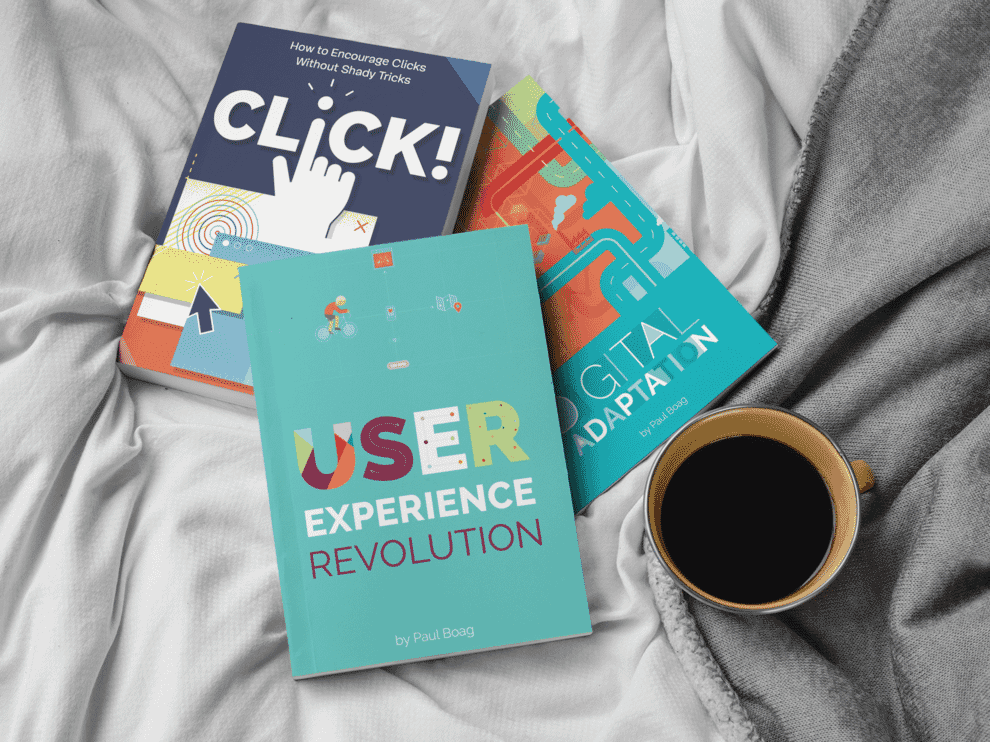
Signup today and get my three latest books.
- Click!: Strategies for encouraging engagement ethically.
- User Experience Revolution: Guide your organization to prioritize UX.
- Digital Adaptation: Successfully navigate digital transformation.
Learn how to
Shape Your UX Strategy Role
Learn how to take control of your UX strategy role and position yourself as a strategic leader.
- Shift from doer to leader
- Define best practices and direction
- Win support from your line manager
- Present your strategy with confidence
Build a UX Strategy Framework
Discover how to build a solid UX strategy framework that scales with your organization.
- Set principles, policies, and standards
- Create design systems and playbooks
- Give teams the tools they need
- Build a trusted expert supplier list
Embed UX Strategy into Projects
Apply UX strategy to increase your influence across every digital project.
- Guide projects without hands-on work
- Influence direction as a consultant
- Embed best practices across teams
- Make a big impact with limited time
Empower Others to Practice UX
Scale UX strategy by turning colleagues into capable UX practitioners.
- Train colleagues in research and testing
- Share simple task guides
- Offer lightweight coaching
- Build team confidence and skills
Sell UX Strategy Internally
Learn to communicate and sell your UX strategy within your organization.
- Persuade leaders and stakeholders
- Handle objections with ease
- Prove value through real results
- Build internal credibility
Drive UX Culture and Adoption
Use UX strategy to drive cultural change and build long-term UX maturity.
- Shift focus to user-centered thinking
- Break down silos and align teams
- Keep UX visible and valued
- Create lasting UX maturity
Want to dive deeper?
I have written a brief overview of what we cover on the email course that you can read before you subscribe.
UX Strategy: How to Lead with Impact (Even Without a Big Team or Budget)
Feeling stretched thin in UX? You’re not alone. A clear UX strategy can transform your role from reactive implementer to proactive leader—even if you lack a large team or big budgets. This overview introduces the essentials; to explore each topic in depth, sign up for the full email course on UX Strategy & Leadership.
Have you ever asked yourself “what is a UX strategy?” It’s the blueprint that connects user needs to your organization’s objectives, guiding every decision you make and creating a shared vision that bridges research, design, and business goals.
What Is UX Strategy (and What It’s Not)
A UX strategy isn’t a feature backlog or project timetable—it’s a living framework that:
- Maps desired business and user outcomes based on research and data
- Defines the principles guiding every UX decision and design trade‑off
- Establishes policies and standards for consistent delivery
- Outlines the tactics that keep momentum going and culture evolving
See also: How to ensure user experience is a priority for your company
This shared blueprint helps teams make decisions quickly, reduces guesswork, and aligns designers, developers, and stakeholders behind a cohesive plan.
Why UX Strategy Matters
A lack of strategy leads to reactive, fragmented work—feature silos, inconsistent interfaces, and missed opportunities to delight users. By contrast, a well-defined UX strategy lets you:
- Align UX efforts with core business goals, boosting credibility and stakeholder trust
- Make evidence‑based decisions rapidly, using metrics and user research
- Empower colleagues to contribute to UX and lighten bottlenecks
- Demonstrate measurable impact on metrics that matter, such as conversion rate, retention, and satisfaction
See also: Become a user experience advocate
Organizations that invest in UX strategy often see smoother collaboration, faster delivery, and stronger outcomes—because every action is guided by a clear purpose.
UX Strategy vs Product Strategy
Product strategy defines feature roadmaps, market fit, and competitive positioning. In contrast, UX strategy focuses on the end‑to‑end experience and user outcomes. While product strategy answers “what do we build?” and “why?”, UX strategy addresses “how will users interact?” and “what problems are we solving for them?”
When aligned, these strategies complement each other and can be embedded within a broader product plan. This ensures that every feature roadmap includes clear experience principles and user research checkpoints.
How to Build a UX Strategy That Works
Fortunately you don’t need a blank slate. By following the UX strategy process from my course you will be able to:
Align With Organizational Goals
Start by mapping company objectives—revenue targets, user engagement metrics, market expansion—and pinpoint where UX can add value. Use that alignment to build credibility and secure resources.

Explore our Key Performance Indicators guide for framing outcomes.
Assess Your Resources and Influence
Take stock of your current assets: analytics platforms, user research tools, internal supporters, and autonomy to make decisions. A simple resource matrix helps you identify quick wins and develop roadmap.
Create Principles and Policies
Define six to eight clear design principles—memorable statements that guide day-to-day decisions. Publish them in a UX design strategy document or digital playbook. Pair these with simple policies that prevent common mistakes without slowing teams down.
Check out Design Principles and Policies and Procedures.
Offer UX Services, Not Just Skills
Position yourself as an internal consultant by offering:
- Strategic user project assessments (SUPA) early in planning
- A weekly UX office hour for quick feedback and questions
- Coaching sessions tailored to team needs
These services weave your UX strategy into every stage of the product lifecycle, ensuring consistency and strategic focus.
Discover more in Design Leadership Roles.
Provide Tools, Templates, and a Kit
Curate a suite of UX tools—testing platforms, research repositories, and design system components—and document them in a public playbook. This playbook should include resources such as:
- Goals and metrics worksheets
- Persona and journey map templates
- Research planning checklists
- Guides to completing common UX tasks
- and much more!

For inspiration, see Creating A Design System and The Digital Playbook.
Educate and Inspire
Combine in-depth workshops with bite‑sized sessions:
- Host webinars or lunch‑and‑learns on usability testing and persona creation
- Share quick how‑to guides and checklists for common UX tasks
- Celebrate team wins and spotlight user‑centered innovations
This multi-tiered approach solidifies understanding and embeds the UX strategy process across your organization.
Culture Change Starts With Strategy
A UX strategy isn’t about controlling every detail; it’s about making it easier for everyone to champion user needs. As your strategy takes root, you’ll:
- Democratize UX activities across teams and projects
- Cultivate internal champions who drive best practices
- Transition from single project wins to sustained, organization-wide impact
But don’t forget to measure culture change through engagement surveys, adoption rates, and qualitative feedback. This ensures you can refine your approach and demonstrate progress.
Next Steps
This post is just a quick overview of what’s involved in developing a UX strategy. For detailed guidance, case studies, and a complete UX strategy template, join the full UX Strategy & Leadership email course.
About me
I’m a UX consultant and conversion optimization specialist with 32 years in digital. I help teams create user experiences that work; winning support, improving results, and making change stick.
Contact me
Email: paul@boagworld.com
UK Based – Clients in North America, Europe, Asia, Australia.
how I help
- UX Strategy – Spot what’s blocking a great experience and get a clear plan to fix it.
- Improving Conversion – Simple, evidence-based changes that make every click count.
- Coaching & Leadership – A sounding board to help you lead with clarity and confidence.
- Training & Workshops – Hands-on sessions, playbooks, and self-learning so your team keeps improving.

Actionable Insights
Paul has the ability to see what is hiding in plain sight. He validated ideas under consideration and provided new, actionable recommendations. The most valuable insight was illustrating how our issues were symptoms of an inefficient UX project team structure.

Genuinely brilliant
Paul is genuinely brilliant to work with. He’s funny, thoughtful, and really good at meeting you where you are. He matches my energy, communicates clearly, and always seems to know how to say the right thing. Working with him feels easy, constructive, and properly enjoyable.

Demonstrates his prowess
As we talk, a pronounced pattern in Boag’s patter becomes apparent: he enthuses about a topic, demonstrates his prowess and then knocks himself down with a swipe of self-deprecation.

Smart & Generous
Paul is one of the smartest, most passionate, most generous people I know in the web / online industry. He is truly committed to helping organizations become simpler and more customer-centric.

An inspiration
Paul is an inspiration, I only wish I’d worked with him earlier in my career. His ability to understand and break down problems and offer advice, drawing on his many years of experience is unrivalled. He genuinely wants to get the best out of you and your organisation and you can’t ask for more than that.

Invaluable
Medecins San Frontieres, being a decentralised international association, faces challenges in meeting the needs of a diverse global audience. Paul and the team at Headscape have been invaluable in helping us see the potential of digital for doing this. They have helped us recognize the changes needed to engage with our connected audiences, bringing clarity and innovation to our digital strategy.

Supportive and Challenging
It’s been a pleasure working with Paul. He manages to be both supportive and challenging at the same time and has a very accessible approach. It’s been a really inspiring process and I would love the opportunity to work with him again.

Entertainingly Informative
We can count on Paul to be entertainingly informative. When we bring him to speak at our workshops, people walk out of the session energized and with a better understanding of how a multichannel journey should be assessed and optimized. Thanks Paul!

Best investment
You’re the best investment I’ve made thus far in my business, and that includes a previous coach, paid mentors and many courses! Your expertise is absolutely invaluable. Thank you!

Moves the Needle
It’s not a question of whether I’d work with Paul again, but what we’re doing next. He takes the time to deeply understand your business and goals, then moves the needle across the growth levers that matter most.