


As a digital agency owner or freelancer, you’re constantly juggling multiple projects, client expectations, and internal processes. It’s easy to feel overwhelmed and lose sight of the bigger picture. But what if I told you there’s a tool that could bring order to the chaos, improve your client relationships, and make your business run more smoothly? Enter the agency playbook.
I recently hosted a webinar on this very topic that you can watch below.
However, I also want to share with you the insights and strategies we discussed. An agency playbook is more than just a set of guidelines; it’s a comprehensive resource that can revolutionize the way you work. Let’s dive into why you need one and how to create it.
Why You Need an Agency Playbook
First, let’s address a common misconception. Many freelancers and agency owners believe their job is simply to deliver websites or digital products. But that’s only half the equation. Your clients aren’t just buying a product; they’re investing in a service and an experience.
Think about the difference between buying a pizza from a supermarket and dining at an Italian restaurant. The end product might be similar, but the experience is worlds apart. Your agency playbook helps you deliver that premium restaurant experience to your clients.
Here are some key reasons why an agency playbook is essential:
- Client Confidence: A well-structured playbook shows clients you have a robust process, increasing their confidence in your ability to deliver.
- Streamlined Communication: It provides a central resource for clients, reducing repetitive questions and emails.
- Consistent Quality: By standardizing your processes, you ensure consistent quality across all projects.
- Onboarding Tool: It’s an excellent resource for new team members, helping them understand your agency’s way of working.
- Time-Saving: Having documented processes saves time in the long run, as you’re not reinventing the wheel for each project.
Now that we understand the ‘why’, let’s explore the ‘how’.
Creating Your Agency Playbook
Your agency playbook should be a living document that evolves with your business. Here’s how to structure it:
Project Stages
Break down your typical project into stages. For example:
- New Work Approach
- Review and Recommendations
- Design and Prototyping
- Development and Build
- Launch
- Ongoing Optimization
For each stage, document your process, deliverables, and client expectations. This gives both your team and clients a clear roadmap of what to expect.

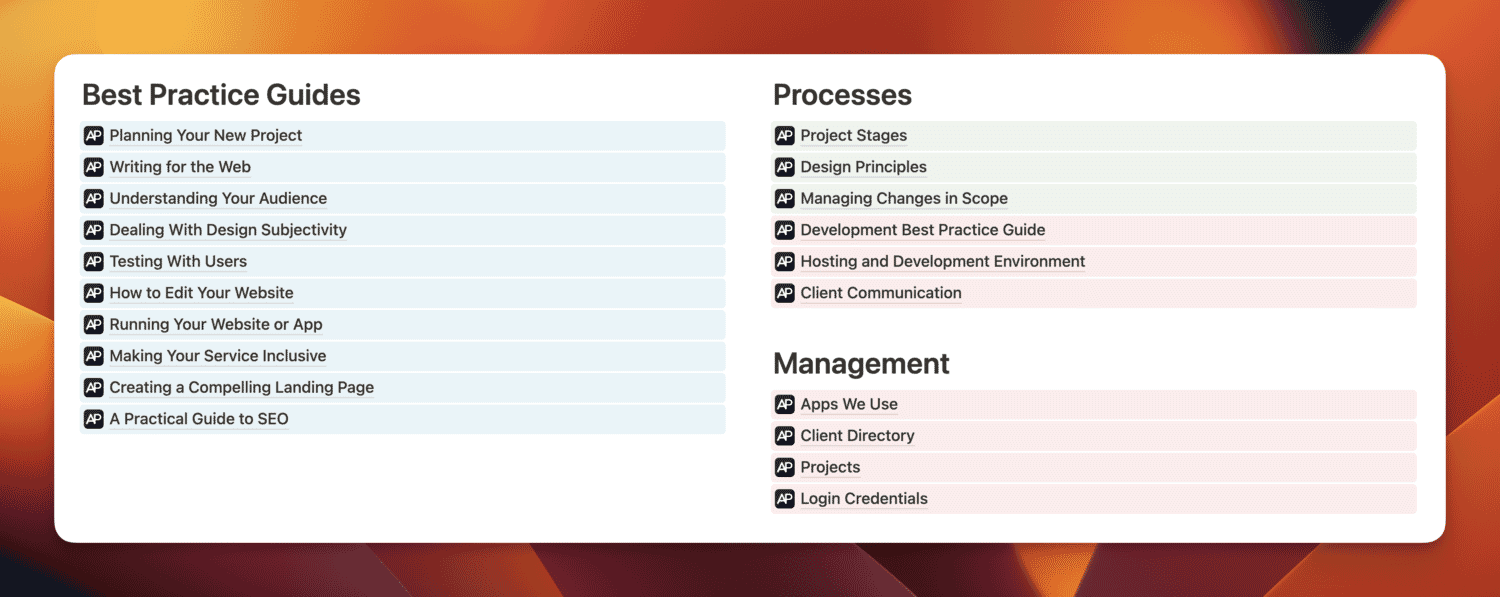
Best Practice Guides
Create educational content for your clients. These could include:
- Planning Your New Project
- Writing for the Web
- Understanding Your Audience
- Dealing With Design Subjectivity
- Testing With Users
- How to Edit Your Website
- Running Your Website or App
- Making Your Service Inclusive
- A Practical Guide to SEO
These guides serve two purposes: they educate your clients, making them better collaborators, and they position you as an expert in your field.
Internal Processes
Document your internal workflows, including:
- Managing Changes in Scope
- Development Best Practice Guide
- Hosting and Development Environment
- Client Communication
- Design Principles
These ensure consistency across your team and projects. These design principles serve as a decision-making framework for your team and can be customized for individual client projects.
Tools and Resources
Include a section on the tools and resources your agency uses. This could cover:
- Project Management
- Client Directory
- Staff Directory
- Design Tools
- Development Environments
This section is particularly useful for onboarding new team members.
Implementing Your Agency Playbook
Creating the playbook is just the first step. Here’s how to effectively implement it:
Customize for Each Project and Client
I recommend maintaining a master playbook while creating customized pages for each project or client. This approach allows you to provide relevant information gradually throughout the project, preventing information overload. For each client or project, I suggest creating a dedicated page that links to the appropriate sections of your main playbook. This method ensures clients can access the right information when they need it, while you maintain a single, comprehensive playbook for your business.
Use it as a Sales Tool
Your playbook can be a powerful differentiator in sales pitches. It demonstrates your professionalism and organized approach.
Keep it Updated
Regularly review and update your playbook to reflect changes in your processes or industry best practices.
Encourage Feedback
Ask your team and clients for feedback on the playbook. Their insights can help you refine and improve it over time.
Overcoming the Challenge of Creating a Playbook
Creating a comprehensive agency playbook might seem challenging, especially when you’re managing multiple projects and client demands. While developing a well-structured playbook does require time and effort, the long-term benefits far outweigh the initial investment.
If you’re feeling overwhelmed by starting from scratch, I have a solution that might help. I’ve created an Agency Playbook Starter Kit based on my years of experience and successful implementation of playbooks in various agencies. This kit provides a solid framework that you can customize to fit your specific needs, saving you valuable time and effort.
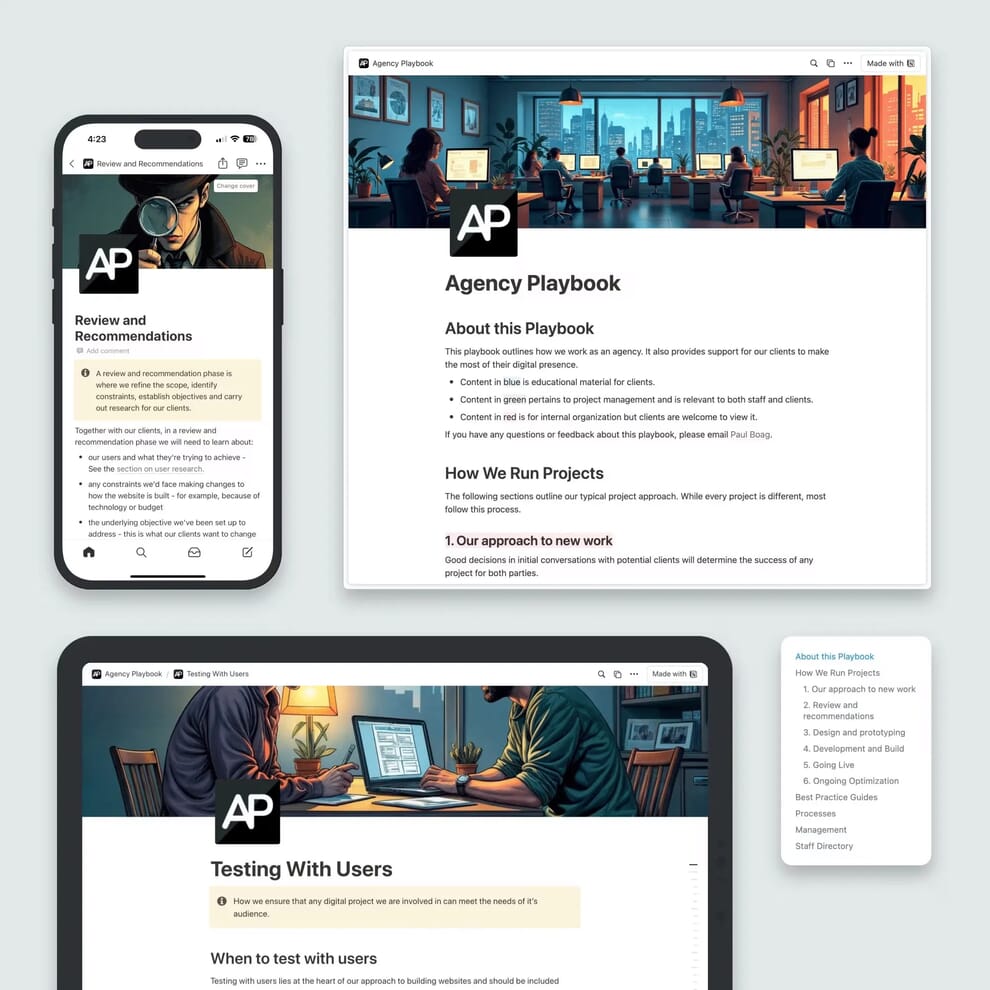
I’ve built the starter kit on Notion, a versatile and user-friendly platform that’s ideal for creating and managing your playbook. Notion’s flexibility allows you to easily adapt the content to your agency’s unique processes and requirements. Its AI features also make it simple to customize the playbook to your specific business.
By using this starter kit, you can jumpstart your playbook creation process and focus on tailoring the content to your agency’s specific needs. It’s an excellent way to get all the benefits of a custom playbook without the stress of building everything from the ground up.
The Impact of an Agency Playbook
Implementing an agency playbook can have a transformative effect on your business. Here’s what you can expect:
- Improved Client Relationships: Clients appreciate transparency and structure. Your playbook provides both.
- Increased Efficiency: With standardized processes, your team can work more efficiently.
- Better Project Outcomes: Clear expectations and processes lead to smoother projects and better results.
- Enhanced Professional Image: A well-crafted playbook sets you apart from competitors and positions you as a true professional.
An agency playbook is more than just a document; it’s a powerful tool that can elevate your business to new heights. By providing structure, improving communication, and setting clear expectations, it allows you to focus on what you do best – delivering exceptional work for your clients.
Remember, your playbook should be unique to your agency. It should reflect your values, processes, and the specific needs of your clients. Start small if you need to, and gradually build it out over time. The most important thing is to get started.
If you need help creating your agency playbook or have questions about implementing one, feel free to reach out. I’m always happy to share more insights or provide guidance based on my experience.


