


In a recent session of our Agency Academy, a group coaching service for agency owners and freelancers, we explored the concept of business processes. This discussion sparked an intriguing conversation about agency playbooks and their potential to revolutionize operations. Today, let’s delve into what makes an effective agency playbook and why it’s an invaluable asset for your business.
What’s an Agency Playbook, Anyway?
Think of an agency playbook as your business Bible – it’s your guide for how things get done. It’s like a living, breathing wiki that grows with your business, housing all your standard operating procedures and educational content in one spot. It covers everything from detailed process breakdowns to client education materials.
The beauty of having all this info centralized is that it keeps everyone on the same page, boosts efficiency, and makes your operations transparent. It’s not just about documenting what we do, but explaining why we do it that way – fostering a culture of continuous improvement and learning.
Why Your Playbook is a Game-Changer
Your playbook has a duel role, benefiting both your team and your clients.
For you and your team:
- Ensure consistency: Everyone knows the best practices, so you’re not reinventing the wheel every time.
- Reduce mental bandwidth: No more wracking your brain for routine tasks – it’s all laid out for you.
- Onboard new hires: Newbies can hit the ground running, shortening that awkward learning curve.
- Improve quality: Checklists and processes mean fewer things slip through the cracks.
For your clients:
- Build trust: A well-documented approach shows you’ve got your shit together.
- Set expectations: Clients know what’s expected of them, reducing those “but I thought…” moments.
- Become transparent: Clients are in the loop about what’s happening when, so no nasty surprises.
- Educate clients: Empowering clients with knowledge leads to smoother projects and happier partnerships.
By addressing both team and client needs, your playbook becomes the secret sauce of effective agency management.
What to Put in Your Playbook
Your playbook’s content will depend on your agency’s focus, but here are some must-have sections:
Sales and Marketing Guides
This is your internal cheat sheet for consistent client acquisition and retention. Include:
- Service breakdowns: Clear explanations of what you offer, so everyone’s singing from the same hymn sheet.
- Pricing and rates: Keep this up-to-date to avoid underquoting or inconsistent pricing.
- Support packages: Details on post-project support to provide clients with long-term value.
- Lead qualification checklist: Key questions to ask potential clients to make sure they’re a good fit.
- Contract templates: Standard documents to streamline proposals and cover your ass legally.
- Pricing guidelines: How to price custom projects, considering complexity and resources.
- Marketing playbooks: Standard procedures for things like social posting or content creation.
Having all this in one place makes your sales and marketing efforts way more efficient and aligned.
Project Phase Breakdown
Map out each phase of a typical project so everyone (including clients) knows what’s coming. For each phase, include:
- Objectives and activities: What happens and why it matters.
- Tools and methods: What you use to get the job done.
- Step-by-step processes: Detailed procedures to follow.
- Client to-dos: What you need from the client at each stage.
- Task checklists: To-do lists to make sure nothing’s missed.
- Deliverables and completion criteria: How to know when you’re done.
This section guides your team and sets clear expectations for clients, leading to smoother sailing all around.
Processes and Resources
This is your go-to guide for daily operations and those “how do we do this again?” moments:
- Core principles: Your agency’s guiding philosophies.
- Tech setup details: Info on hosting, development, and deployment.
- Change request process: How to handle mid-project changes without losing your mind.
- Team directory: Who does what in your agency.
- Tool list: Software and platforms you use, with access info and guidelines.
- Client support process: How clients get help when they need it.
- System links: Direct access to your CRM, project management tools, etc.
Having all this at your fingertips makes life easier for everyone and keeps things running smoothly.
Educational Guides
This is where you show off your expertise and add value:
- Web 101: Basic overviews for clients explaining how the web works and associated limitations.
- Content creation best practices: Tips on writing for the web or creating multimedia.
- User research and testing methods: Show how you gather and use feedback.
- Collaboration guides: How to work effectively with your team.
- CMS tutorials: Help clients manage their own content like pros.
- SEO basics: Fundamental principles clients should understand.
These guides position you as the go-to experts and can set you apart from the competition.
Getting Started
Building a playbook might seem like a massive undertaking, but it doesn’t have to be. Start small and grow organically:
- Document as you go: As you work on projects, jot down your process and rationale.
- Add tools and resources: When you use a new tool, add it to the playbook right away.
- Turn client questions into content: If a client asks something, write a detailed answer that can help others too.
- Learn from challenges: When you hit a snag, develop a process to prevent it in the future and add it to the playbook.
- Define your principles: Take time to articulate what guides your decision-making.
By making playbook development part of your daily routine, it becomes way more manageable and even kind of enjoyable.
Use a Template
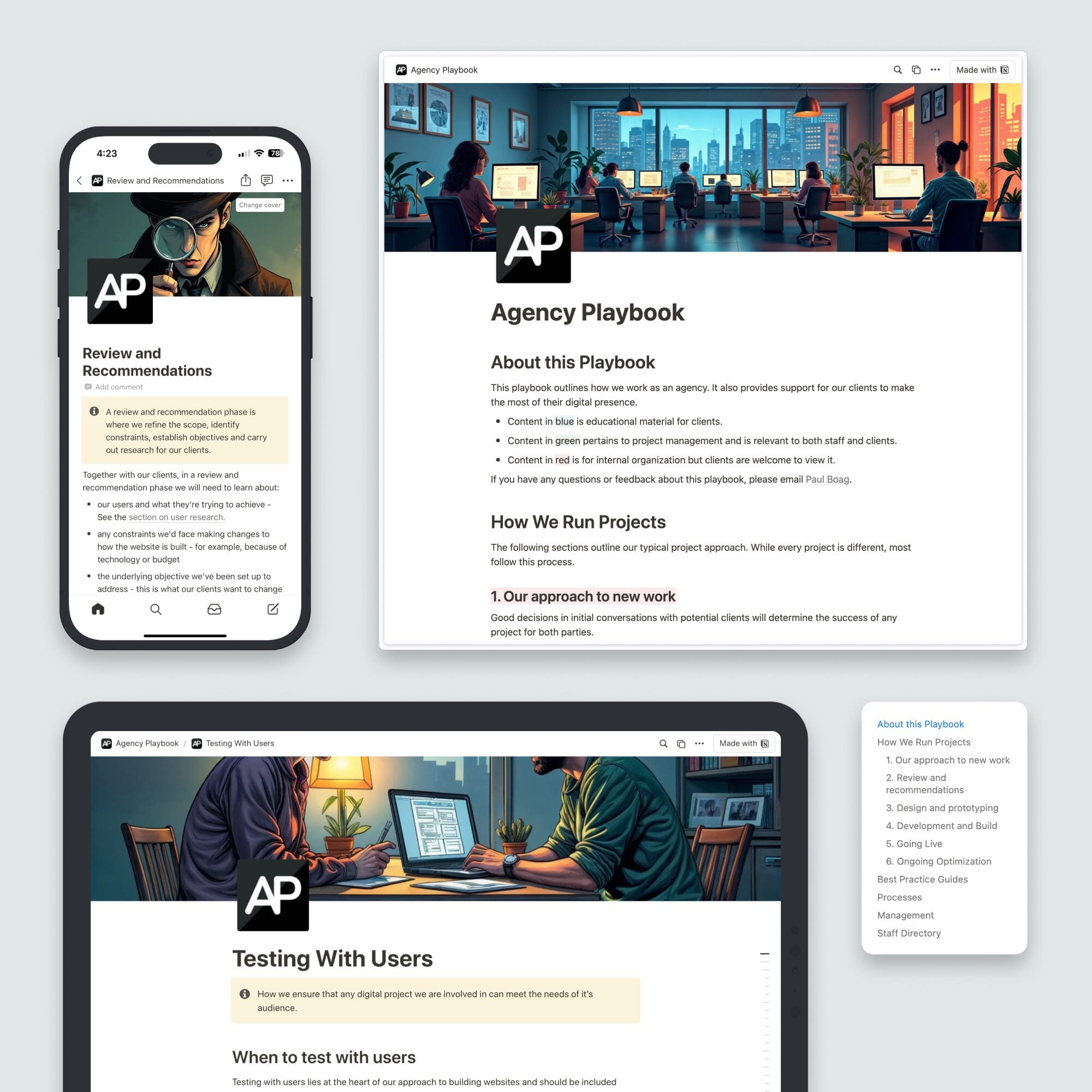
That said, you don’t have to start from scratch. While you’ll always need to customize a playbook to fit your needs, there are templates that can save you a lot of time. For instance, the playbook I offer comes with 10 client guides, 5 database tools, and dozens of standard operating procedures.
Keep It Flexible
Remember, there’s no one-size-fits-all playbook. It’s a living document that should evolve with your agency. Review and update it regularly to reflect new insights, tools, and processes. Get your team involved in contributing – it’ll keep the playbook relevant and valuable.
Being flexible allows your playbook to adapt to changing market conditions, new tech, and evolving client needs. It’s not just a static document, but a strategic asset that grows with you.
Conclusion
Investing time in a comprehensive agency playbook sets the foundation for smoother operations, better client relationships, and a more cohesive team. It’s an ongoing process, but one that yields significant benefits in efficiency and professionalism.
If you haven’t started your playbook yet, now’s an excellent time to begin. Start small, be consistent, and observe how this tool transforms your work processes. Your future self will appreciate the effort you’re putting in now.
This topic, among many others, is frequently discussed in our Agency Academy. If you’re an agency owner or freelancer looking to optimize your business processes, consider joining our community for more insights and collaborative learning opportunities.


